Case study
OpenAlgo Trading
A real brokerage integration, built with a hard rule: no trade executes without a human click.
Deployment
Private deployment (Kotak Neo brokerage integration) — not publicly hosted · Shipped (private)
The challenge
Automated trading systems are easy to build recklessly and hard to trust. The brief here was narrow and deliberate: connect a real technical strategy to a real brokerage account, with an architecture that makes a fully autonomous, unsupervised bot structurally impossible.
The approach (built with Claude Code)
Enable built the integration layer connecting a technical-indicator trading strategy (running on TradingView) to a self-hosted instance of OpenAlgo — an open-source broker-gateway project — wired into the Kotak Neo brokerage API. Every generated signal reaches a human-facing approval screen; no trade routes to the broker without a manual click. The build shipped in three deliberate phases: strategy validation, sandbox testing against the live API, and finally supervised live trading — each phase a hard gate before the next.
What we shipped
A working, human-in-the-loop trading pipeline: signal generation → self-hosted gateway → mandatory manual approval → broker execution, plus the operational tooling (session authentication, notifications, logging) around it. Built in roughly nine days.
Outcome
This is a private financial system. No performance, return, or trading-outcome figures are published for this case study — that's a permanent rule, not a pending item.
Screenshots
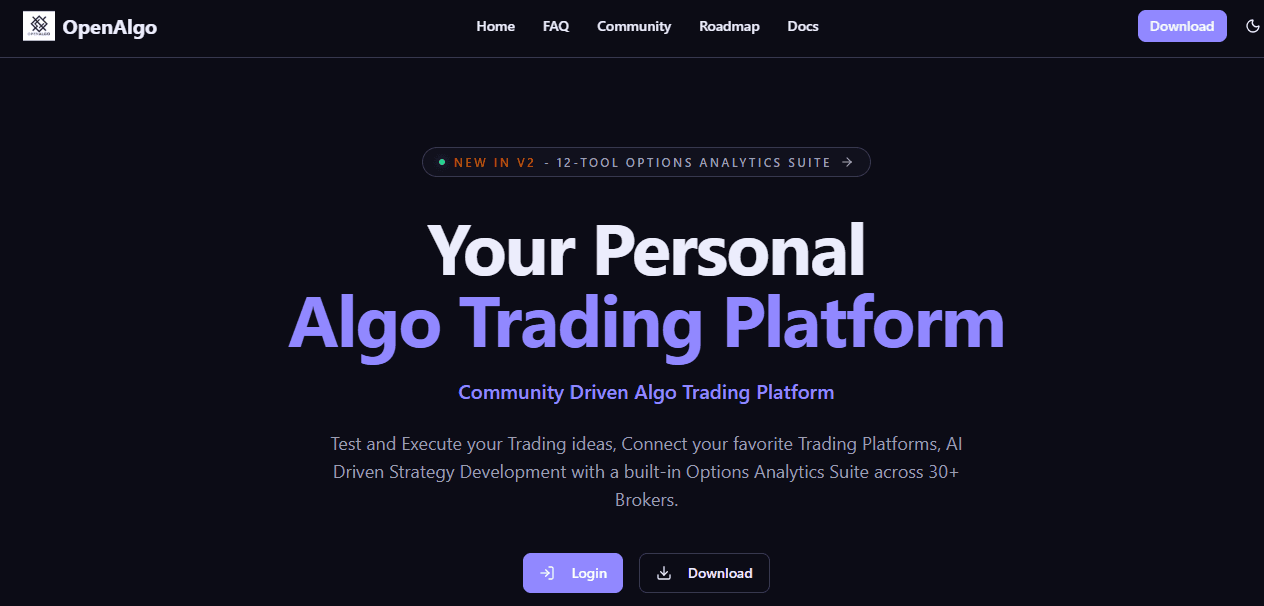
Enable's build extends the open-source OpenAlgo platform (pictured) with a custom Kotak Neo integration, trading strategy, and human-approval guardrails — Enable did not build OpenAlgo itself.
Tech notes
Pine Script v5 (TradingView) → self-hosted OpenAlgo (open-source; Python/Flask + React) → Kotak Neo API, Cloudflare Tunnel, human-approval “Action Center.”